
The Wall Outside the Window A Story of Wren, Her Dragon and the Soma
.
A Mender Named Wren
Once upon a time, and not very long ago at all, there lived a mender named Wren. She was in the business of settling souls and calming bodies.
Wren's work was quiet and with ancient roots: women came to her carrying things too heavy to name, and she sat with them until the weight told its story through their bones and the bones became free to let the weight go. Bones can do what bones should do much easier without the weight of the heavy untolds. Bones should carry the body that carries the soul as it dances across moonlight, as it giggles across star-filled skies. Bones should carry the soul as it remembers to love the bones that carry it. Wren was good at this quiet, ancient craft, in the way that people are good at the thing they were made for. You see, Wren had discovered what her bones were meant to carry, and it was to bring glow back to the souls who crossed her threshold, her Limena. Wren spent time teaching the women who laid down their untolds about the magic of a Limena, a threshold all their own. Wren taught the women that their Limena was always in their heart, and that it did not belong to a place or a time. Their Limena was their own. But often, as teachers do, teachers forget the learning themselves.
Wren forgot that a true Limena and true mending magic live in the heart and the soul. They do not belong to a room. The trouble with forgetting that is that you forget you are more than the walls that hold you.
The Lighthouse
For a while, Wren did her mending in a lighthouse, all tucked away at the top. But it was a borrowed room in a place that belonged to someone else. The keeper of the lighthouse kept her hidden away up there, high and walled in. And yet, even tucked away, the room still had a glow. Perhaps it was the great light above her, doing what lighthouses cannot help but do. Perhaps it was the glow Wren was mending back into the women. Salt from the sea below settled on her windowsills, and Wren came to know that glow and salt water often share a room. Wren had never seen the keeper of the lighthouse. She had only heard. She had heard he was an old man with deep wrinkles and a way about him that was unsettling. The old man was too old and too unsettled for his bones to carry him up the lighthouse stairs, so he had a messenger, and the messenger sometimes spoke when Wren would start to ask questions. But Wren loved that room, and the women with the heavy untolds found her anyway, so for a time it was ok. She thanked that room every time she crossed the threshold, a doorway that Wren decided was her Limena. The trouble with worldly doorways is that they do not travel in your heart the way a true Limena will. But still, the room was Wren's, and the room was tucked away in a hidden place, a hidden place with word of souls whose bones had already turned to dust. Wren and the boneless souls enjoyed their work in the room in the busy place, tucked away. She lit it with candles and filled it with soft things, and the women who found their way to it said they could breathe there.
But the room was never really hers, and one day the people who kept that place decided, in the way keepers sometimes do, that there was no room for her after all. The ending was not gentle. It crushed her soul, or maybe it was her bones. She couldn't quite tell. What would come of the souls without the bones, the ones she spent late nights with as she penned the plans for the next day's mendings? What if the magic of the mender was only magic in that room? Wren, who should have remembered her name was that of a bird, and birds fly and wrens burst into flight, felt frozen from the ache of saying goodbye. It's funny how things work. Wren's heart ached to leave a place where she had been walled in and kept hidden away. It's funny how a wren could forget her worth.
When Wren packed her candles, she packed some other things too, without meaning to. Wren knew, though this time she seemed to forget, that so often we pack up the very things we do not mean to carry. But the teacher can forget what she teaches, and so Wren packed: a name that now made her jaw tighten, a wariness of keepers and the places they keep, and the low hum of a lesson her body had decided to hold onto: this is what keepers do.
Bodies are faithful students. They only ever study to protect us.
The Bell and the Dragon
Wren went looking for a new place, and the road, as roads do in these stories, brought her to a lane of healers at the edge of an old town, and on that lane, a small yellow cottage. The cottage was kept by a gentleman of the old storybook kind, silver-haired and merry-eyed, the sort of soul a tale keeps safe for exactly the right page, and he loved that lane the way you love a living thing. Wren's body noticed that, an old keeper again, a man with years in his face and keys in his hand, was the very shape of the thing she had heard about and learned to fear. A bell rang low in her chest.
Careful. We know this shape.
The Soma
Wren's bones carried a message and sent it to her soul, and the little yellow cottage felt scary; the storybook, silver-haired, merry-eyed keeper felt like a shadow. Wren felt her throat close, her heart race. Her legs tightened.
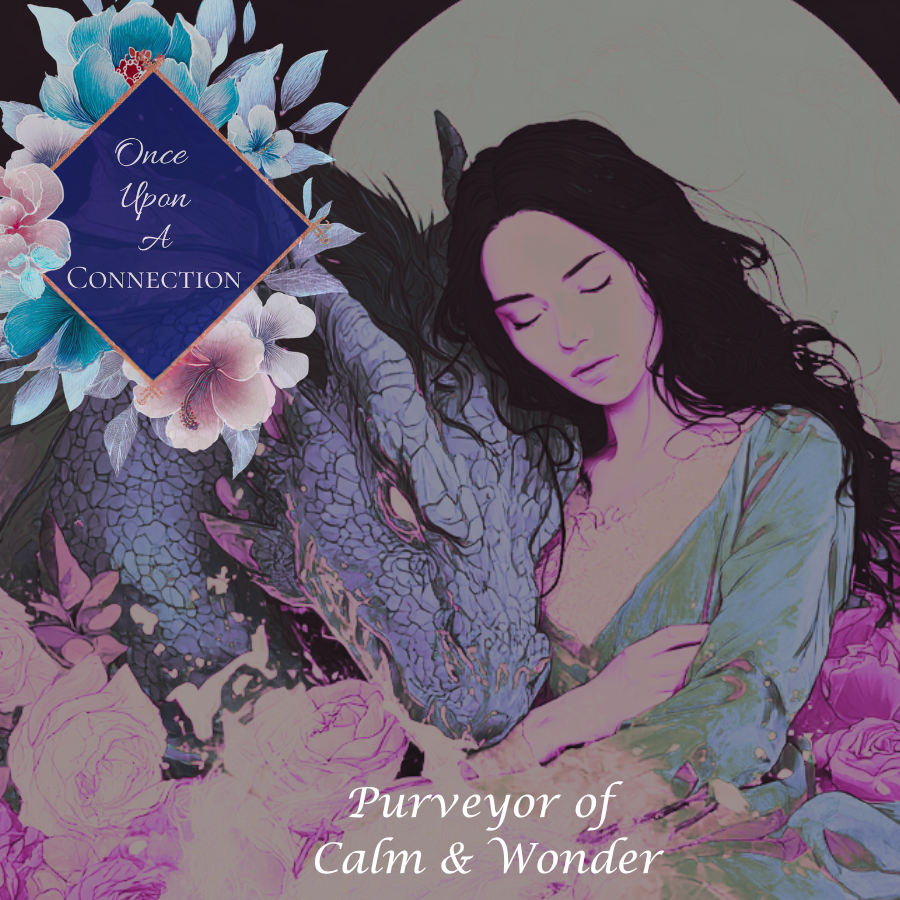
But then something happened. As she began to narrow her eyes, her bones started to send out another message, one that called on her dragon, her dragon who could grow right up out of Wren when she needed to. The dragon was good and necessary, and the dragon had saved Wren many times when Wren could not fly.
But through the years, Wren taught her dragon, as teachers do, to pause before breathing fire. Fire was good, but fire was not always what was needed. In the pause, Wren and her dragon learned to think and assess.
So Wren paused, and her dragon stood down, at least for a moment. She breathed until the bell quieted enough to hear underneath it. And underneath the bell, the gentleman was saying: you are different, and you deserve a place that is different. He pressed an iron key into her hand, a key so old it had outlived everyone who had ever locked anything with it. Nobody asked her to be smaller. With the old key in her hand, the dragon retreated and was ready to rest, but Wren was still not quite sure. Her body, her breath. And then the keeper of the cottage told her something. Surely it couldn't be. The man told her he saw her dragon, and he asked if she might like a job there too. He did not ask Wren to hide her dragon. Instead, he asked if he could meet her. And he asked if the dragon would like to stand guard at the Limena of the yellow cottage, to let all who crossed through the door know: this cottage is protected by the glowing eyes of a dragon. And when the dragon protects the Limena, the women can heal and put down their untolds.
And so Wren and her dragon remembered.
The shape of the scary was the same. The man was not.
The old keeper of the lighthouse had only ever been a rumor; but the silver-haired cottage keeper stood in front of her and asked to be known. The silver-haired keeper was not the reason for the bell. He was not the reason for her legs locking, her eyes narrowing. He was not the alarm. He was simply the silver-haired keeper of the storybook cottage who handed her a very old key.
Before Wren walked away with her key, the man invited Wren to learn about the souls whose bones had turned to dust who also lived on the lane. Wren softened, and her dragon laid down. The shape of the scary felt the same. The man was not.
Crossing the Limena
And so Wren packed her candles and her wares, and she said goodbye to the lighthouse, and to the souls without bones who had become her friends. And Wren, with her bag on her back, her walking stick in her hand, and her dragon close by, began her new journey to the yellow cottage. Under a full moon, she walked up that hill, she turned that key, and she crossed a new Limena.
The Wall Outside the Window
That first evening, setting her soft things into new corners, Wren looked out the front window of the front room, and her breath caught. There was nothing out there but a wall. Stone, gray, filling the window edge to edge, as if the world ended at her doorstep. And the bell in her chest rang again, louder this time, with the oldest story it knew: walled in. Shut out. Trapped again. You see? You see? Her dragon, who had been resting as she unpacked, lifted her head, and her eyes glowed.
The pause. Always the pause.
Wren stood at the window and breathed, and then she did the thing the pause makes room for: she got curious instead of certain. She stepped out her front door into the evening, and looked up.
The wall was not a wall. It was a holding.
Across the lane stood a great old hall on high ground, a place of gathering and music and light, and the stone she had seen was the wall that held its ground in place, that had held it for a hundred years and more, patient as bedrock, so that the beautiful thing above it could stand. The stone outside her window was not there to keep Wren in. It was there so that something old and good would never fall on the ones below.
She stood in the lane a long time. Then she laughed, the kind of laugh that has a little salt water in it.
Because here is what Wren understood, standing there: the world had not waited politely for her wounds to close before sending its gifts. It had sent them fast.
Kind keepers in the shape of unkind ones, a healer next door who wore the very name of the lighthouse messenger she had learned to flinch at, a wall outside her window on her very first night. Any of them, on a worse day, without the pause, would have tasted like salt in an open wound. Proof that it never stops. More of the same.
They were not more of the same. They were the same shape, arriving gently, so her body could learn a second lesson to sit beside the first: the shape was never the danger. Unhealed people were the danger. The shape is just a shape, and sometimes the shape of a wall is the shape of a thing that has been holding steady for a century, waiting for you to move in across the lane and finally see it for what it is.
Wren gave her dragon reprieve, and the dragon did what dragons should do: keep watch while the mender mended, because every softness deserves a guardian. She put her candles in the windows. And when women began to find their way up the lane, carrying things too heavy to name, she would sometimes catch them glancing at the great stone wall outside the front window, and she would say what she had learned there:
Look again, love. Some walls are not built against you. Some walls are what the holding looks like from below.
One More Piece of Magic
And before this story ends – as magic stories often do – there is one more piece of magic to be told.
Every now and then, especially under the glow of a full moon, Wren would wonder about the souls without bones she left behind in the lighthouse.
On one particular night, the dragon set up guard at the cottage door and Wren waited for the women with the heavy untolds to make there way to cottage. Wren looked out her window at the wall across the way and then she looked down the hill to see women making their way to her. The moon shone brightly down that hill and Wren saw something different. She saw women dressed in ancient clothes crest over that hill, they walked and they soared and they made their way to the cottage Limena.
The dragon curtsied and familiar friends made their way through. Because even souls without bones will find their way back to their mender.
From Me, to You
Your nervous system is a faithful student, and it remembers shapes: a name, a dynamic, a view from a window. It will ring its bell at every echo, trying to keep you safe. The bell will call your dragon. The bell is not the problem. The dragon is not the problem. The bell and the dragon without the pause are the problem. Because life, in my experience, does not wait until we are healed to send the gentler versions of what hurt us. They arrive early, wearing familiar shapes, and whether they land as salt or as medicine depends entirely on whether we can pause, notice, and decide. That pause is a skill. It lives in the body, and it can be learned. It is, honestly, most of what I teach.
And if you are standing at the start of a big, hard change right now, if the bell in your chest is ringing so loudly you cannot hear anything underneath it, this story is for you, tonight, especially. The wall outside your window may not be what it looks like from where you stand.
Come learn the pause in a yellow cottage, behind a door a dragon keeps, across the lane from a wall that has been holding for a hundred years.
Wren's story is a fairytale. Like all fairytales, its magic comes from many Limenas crossed, many lives lived, through time and oceans far and wide, with a sprinkle of sea salt and the glow of a dragon's watch, and its characters from none. But if you look real hard, you might just catch a glimpse of Wren and her friends around the yellow cottage.
